

It can be worrying to notice your cat becoming thinner, especially if they still seem happy, are eating normally, or are behaving mostly like themselves.
Many cat owners assume weight loss is simply part of ageing, but unexplained weight loss in cats is often a sign that something more serious may be happening beneath the surface.
At The Village Vet, weight loss is one of the most common reasons older cats are brought in for assessment. Cats are naturally very good at hiding illness. Even subtle weight changes can sometimes be an early warning sign of underlying disease.
Is weight loss normal in older cats?
No. Ongoing or unexplained weight loss is not considered a normal part of ageing.
As cats get older, they can become more prone to conditions such as:
- Hyperthyroidism
- Kidney disease
- Diabetes
- Dental disease
- Arthritis
- Gastrointestinal disease
- Cancer
- High blood pressure
Many of these conditions develop gradually, so owners often notice weight loss before anything else.
Sometimes the changes are very subtle. At first, you may notice one or multiple of the following:
- Your cat feels lighter when picked up
- Their spine becomes more noticeable
- Muscle loss develops over the back legs
- They seem hungrier than usual
- They become fussier with food
- Their coat becomes oily, rough or matted
- They groom less
- They start drinking more water
- They urinate more often
Because cats hide illness so well, even small changes can be important.
Many cats hide illness surprisingly well

Cats instinctively hide signs of illness and discomfort, which means weight loss is often one of the first noticeable signs that something may be wrong.
Many owners justify these subtle changes by saying their cat is “just getting older”. However, by visiting the Village Vet for an in depth discussion, physical examination and diagnostic testing with one of our veterinarians, we may discover an underlying medical condition. We strongly recommend that our senior patients come in for regular checkups every six months.
Subtle changes such as:
- Gradual weight loss
- Increased sleeping
- Decrease in activity and ability to jump onto furniture
- Reduced grooming
- Changes in appetite
- Increased thirst and urination
- Behavioural changes; excessive vocalisation, inappropriate urination, aggression, hiding, etc.
Any of the above can indicate diseases such as hyperthyroidism, kidney disease, diabetes, dental disease, or chronic pain.
Early veterinary assessment and diagnostics (e.g., blood and urine testing) can make a very big difference in your cats long term health and wellbeing.
Why is my cat losing weight but still eating?
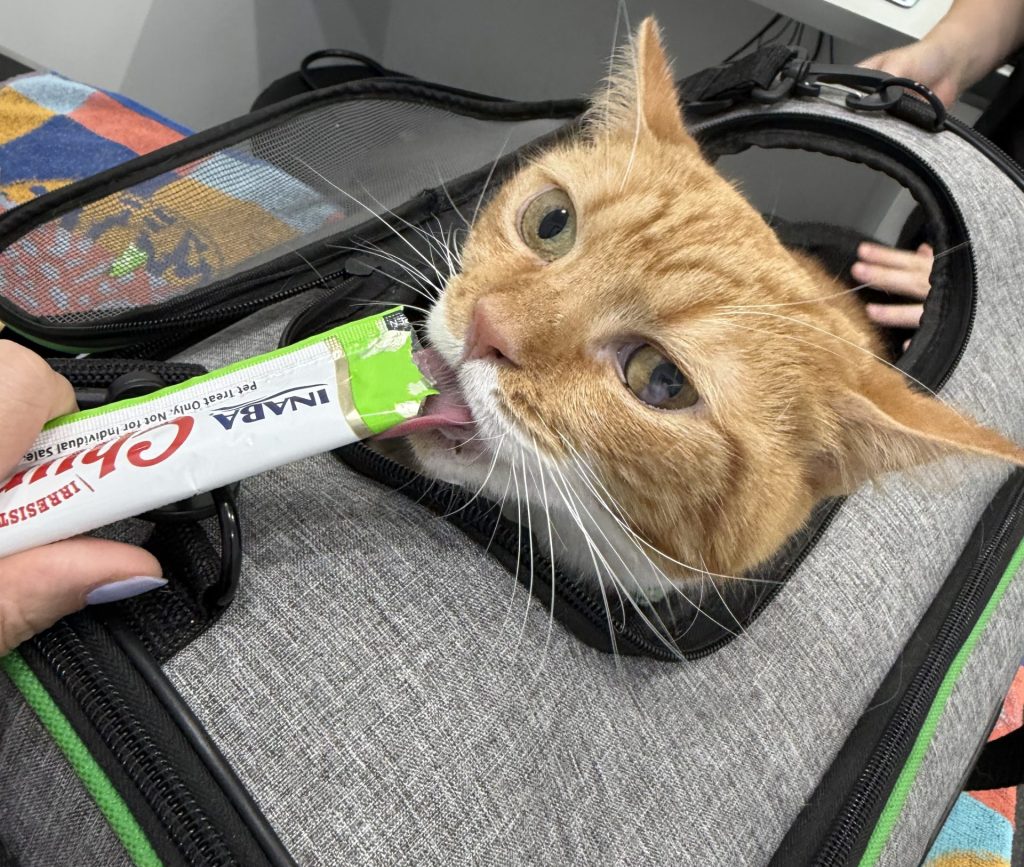
One of the most common causes of weight loss in cats that are still eating well is hyperthyroidism.
Hyperthyroidism occurs when the thyroid gland becomes overactive, causing the body’s metabolism to speed up dramatically. Many cats with hyperthyroidism develop:
- Weight loss despite a good appetite
- Increased hunger
- Increased thirst
- Vomiting
- Restlessness
- Behavioural changes
- Heart disease
- Poor coat quality
At The Village Vet, we provide advanced hyperthyroid cat care through our Sydney Hyperthyroid Cat Hospital (SHCH) at our Killara clinic. At SHCH our team provides a thorough diagnostic workup, medical management, and radioactive iodine treatment for suitable patients with hyperthyroidism.
Hyperthyroidism is not the only possible cause of weight loss with good appetite. Diabetes, digestive diseases, dental pain, kidney disease, and some cancers can also cause cats to lose weight even while continuing to eat. A lot of these conditions have very similar symptom’s, which is why a proper vet check is crucial.
What illnesses cause weight loss in cats and what should I be looking out for?
There are many possible reasons a cat may begin losing weight.
Some of the more common causes include:
Hyperthyroidism
Very common in older cats.
Signs may include:
- Weight loss
- Increased appetite
- Increased thirst
- Hyperactivity
- Vocalisation
- Poor coat quality
- Vomiting
Kidney disease
One of the most common diseases seen in cats of all ages.
Signs may include:
- Weight loss
- Increased thirst
- Increased urination
- Vomiting
- Reduced appetite
- Lethargy
Dental disease
A common disease seen in cats of all ages
Signs may include:
- Weight loss
- Avoid dry food or preferentially chew on one side of their mouth
- Eat slower
- Become fussy eaters
- Bad breath
- Red gums
- Drop food
Many cats continue eating despite significant dental pain.
Diabetes
Seen more commonly in senior cats.
Signs may include:
- Weight loss
- Drink more water
- Urinate more frequently
- Become hungrier
- Become weaker or lethargic
Gastrointestinal disease
Digestive disorders can interfere with nutrient absorption and appetite.
Signs may include:
- Weight loss: gradual or sudden
- Vomit frequently: vomiting more than once a month
- Change in their defecation quality: constipation, diarrhoea, mucus, blood, change in frequency
- Become fussy eaters
- Appear bloated
- Are painful when picked up around their abdomen
Cancer
Some cancers can cause gradual weight loss, particularly in older cats. Different cancers behave differently.
Signs can include
- Weight loss
- Vomiting
- Appetite change
- Lethargy
When should I worry about cat weight loss?
It is a good idea to organise a veterinary assessment if your cat has not seen a vet in more than 6 months or is:
- Steadily losing weight
- Drinking more water
- Eating more or less than usual
- Vomiting regularly
- Becoming less active
- Struggling to jump onto furniture or heights
- Grooming less
- Hiding more often
- Developing behavioural changes
- Showing muscle loss
- Acting “not quite right”
The earlier the underlying disease is detected, the more treatment options are often available.
How do vets diagnose weight loss in cats?
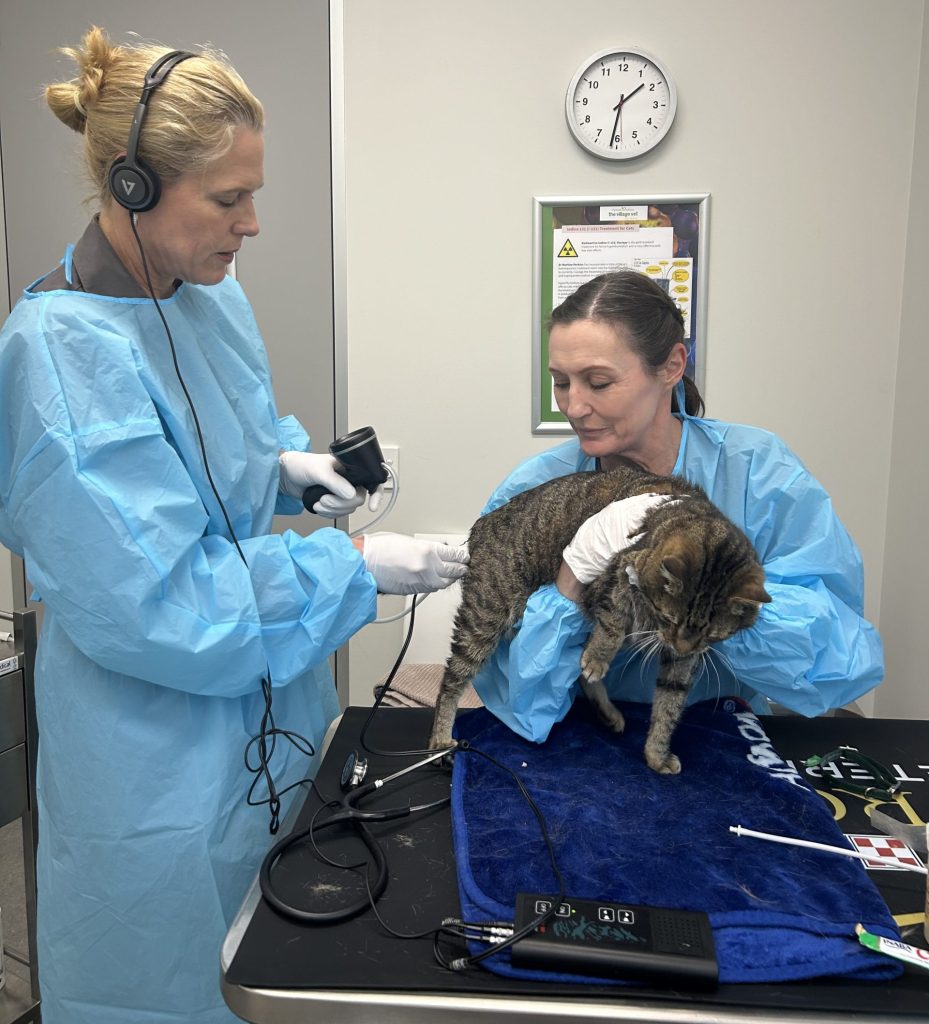
Because so many illnesses can cause similar symptoms, diagnostic testing is often very important.
At The Village Vet, investigating weight loss in cats may include:
- A thorough physical examination
- Weight and body condition assessment
- Blood pressure checks
- Blood, urine or faecal testing
- Thyroid testing
- Dental assessment
- Imaging such as X-rays or ultrasound where indicated
Our in-house laboratory allows us to perform many blood and urine tests quickly, often with same-day results. This helps us identify problems earlier and begin treatment sooner when needed.
Blood testing can help identify conditions such as:
- Hyperthyroidism
- Kidney disease
- Diabetes
- Infection
- Anaemia
- Liver disease
- Pancreatitis
- Inflammatory conditions
Stress Free and cat-friendly veterinary care
We understand that many cats become stressed during vet visits, especially when they are feeling unwell.
At The Village Vet, our calm cat care approach is designed around understanding feline behaviour and reducing stress wherever possible.
Our clinics offer:
- Stress Free and Calm Clinic aligned care
- Feline-friendly handling
- A dedicated cat consult room at Killara
- Quieter, calmer appointments
- Support for anxious cats
- Senior cat-focused care
We understand that many owners worry their cat will become stressed during a visit, which is why we work hard to make appointments gentler and more comfortable.
If you are worried about bringing your cat into the clinic or they become stressed in their carrier or car, please call one of our clinics to speak with our friendly team members about some tips, tricks and recommendations around cat friendly visits.
Additionally, we offer mobile veterinary visits on Tuesday. If this is more suitable for your cat, please call one of the clinics to arrange a mobile consultation.
Senior cat health checks matter
We generally recommend senior cats have health checks every 6 months, especially once they are over 7 years of age.
Regular senior cat checks help us:
- Monitor weight changes
- Detect illness earlier
- Identify subtle changes over time
- Assess kidney and thyroid health
- Support long-term quality of life
Many diseases are much easier to manage when caught early.
Concerned about your cat losing weight?
If your cat has started losing weight, drinking more, eating differently, or simply seems “not quite themselves,” it is worth organising a check-up.
At The Village Vet, we provide comprehensive senior cat care, blood testing, radiology, ultrasonography, hyperthyroid management, dental care, and Stress Free feline-focused veterinary care across our Pymble and Killara clinics.
Early diagnosis can make a very big difference to your cat’s comfort, health, and long-term quality of life.
Written by Dr Belle BVSc
Veterinarian at The Village Vet