

Has your cat started losing weight despite eating well? Are they drinking more water, eating more than usual, or behaving differently?
Many owners assume these changes are simply part of getting older. In reality, they can be signs of hyperthyroidism, one of the most common hormonal diseases seen in middle-aged and senior cats.
The good news is that hyperthyroidism is highly treatable, and with early diagnosis many cats go on to enjoy an excellent quality of life.
What is hyperthyroidism in cats?
Hyperthyroidism, also known as thyrotoxicosis, occurs when the thyroid gland produces excessive amounts of thyroid hormone.
The thyroid glands are located in your cat’s neck. They help regulate metabolism. When it becomes overactive, it essentially causes the body’s engine to run too fast.
Hyperthyroidism most commonly affects middle-aged and older cats and is one of the most frequently diagnosed medical conditions we see in senior feline patients.
What are the signs of hyperthyroidism in cats?
The signs often develop gradually and can be easy to miss initially.
Common symptoms may include:
- Weight loss
- Increased appetite
- Increased thirst
- Increased urination
- Behavioural changes (restlessness, hyperactivity, vocalising)
- Poor coat quality (greasy, matted or unkempt coat)
- Vomiting and/ or diarrhoea
Because many of these changes happen gradually over time, they can easily be mistaken for a normal part of ageing. That’s why regular veterinary check-ups are so important, especially as our pets get older. We recommend six-monthly health checks for all cats over the age of seven and yearly health checks for pets under seven years of age to catch any issues early.
Why is my cat losing weight but still eating?
This is one of the most common ways hyperthyroidism first presents.
Because thyroid hormone controls metabolism, cats with hyperthyroidism burn through calories much faster than normal. Even though they often eat more food, they can still lose significant amounts of weight.
Why is my cat drinking more water?
Many cats with hyperthyroidism drink and urinate more than usual.
This happens because excessive thyroid hormone affects multiple body systems and can place additional strain on the kidneys.
Owners may notice:
- More frequent visits to the water bowl
- Larger clumps in the litter tray
- Increased urination
- Empty water bowls more quickly than usual
While hyperthyroidism is one possible cause, increased thirst can also be associated with other conditions commonly seen in older cats, including kidney disease and diabetes.
If your cat is drinking significantly more water than normal, it is worth arranging a veterinary examination and blood testing.
Is hyperthyroidism common in older cats?
Yes, Hyperthyroidism is most commonly diagnosed in middle-aged and senior cats.
As cats age, many owners notice changes such as:
- Weight loss
- Increased thirst
- Increased appetite
- Increased vocalisation
- Changes in behaviour
- Poor coat quality
While these signs are often attributed to old age, they can actually indicate an underlying medical condition such as hyperthyroidism.
Hyperthyroidism is one of several conditions we commonly screen for during senior cat health checks, alongside kidney disease, diabetes, arthritis and high blood pressure.
This is one of the reasons we recommend senior cats have health checks and blood testing every six months where possible.
What happens if hyperthyroidism is left untreated?
Left untreated, hyperthyroidism can place significant strain on the body.
Over time it may contribute to:
- High blood pressure
- Heart disease
- Progressive weight loss
- Muscle wasting
- Reduced quality of life
The condition often becomes progressively worse without treatment.
Early diagnosis allows treatment to begin before complications become more serious.
How is hyperthyroidism diagnosed?
Diagnosis is usually straightforward.
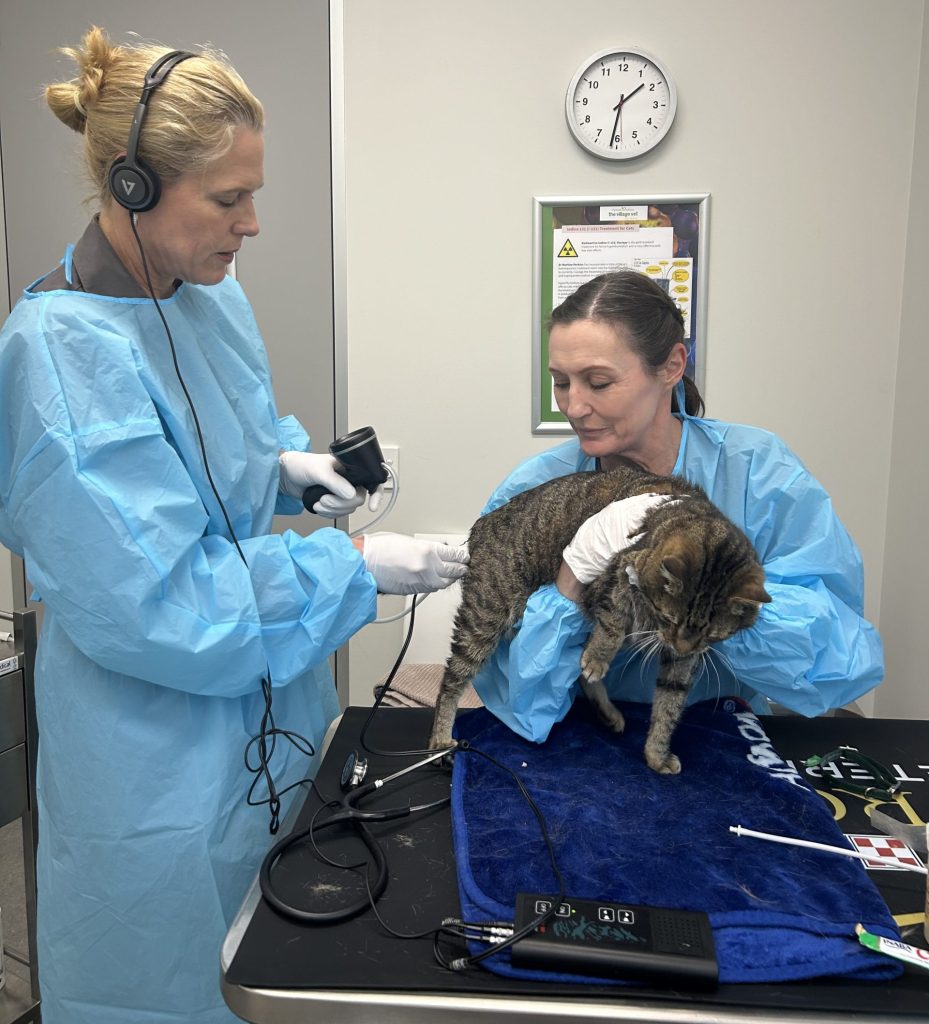
At The Village Vet, diagnosis typically involves:
- A physical examination
- Review of your cat’s symptoms
- Blood testing including measurement of thyroid hormone levels (T4)
- Blood pressure measurements
Additional testing may sometimes be recommended to assess overall health and identify any concurrent conditions that may influence treatment decisions.
What are the treatment options for hyperthyroidism?
Several treatment options are available.
Anti-thyroid medication
Medication can help control thyroid hormone production and is often used as an initial management option.
While effective, medication requires lifelong administration and ongoing monitoring.
Prescription thyroid diets
Some cats can be managed using specially formulated prescription diets that restrict iodine intake.
Strict adherence is essential for these diets to be effective.
Radioactive iodine (I-131) treatment
Radioactive iodine therapy is recognised worldwide as the gold standard treatment for feline hyperthyroidism.
Unlike medication or prescription diets, radioactive iodine aims to treat the underlying problem rather than simply manage it.
Why is radioactive iodine considered the gold standard?
Radioactive iodine (I-131) therapy is recognised worldwide as the gold standard treatment for feline hyperthyroidism.
Unlike medication or prescription diets, radioactive iodine treats the underlying problem rather than simply managing the symptoms.
Benefits include:
- Treats approximately 95% of cats with a single treatment
- No daily medication
- No anaesthesia required
- Non-invasive treatment
- Minimal side effects
- Often more cost-effective long-term than lifelong medication and monitoring
A small number of cats may require additional treatment, while a small percentage may develop low thyroid levels following treatment and require supplementation.
For most cats, radioactive iodine provides an excellent long-term outcome and significant improvement in quality of life.
Radioactive iodine treatment at Sydney Hyperthyroid Cat Hospital
The Village Vet Killara is home to the Sydney Hyperthyroid Cat Hospital (SHCH), one of only a small number of facilities in Sydney able to provide radioactive iodine treatment on-site.
The treatment is administered as a single oral capsule.
Following treatment, cats stay in our specially designed radiation ward for approximately 5–7 days while radiation levels safely decline.
Our purpose-built Cat Capsula has been specifically designed for the safe and comfortable treatment of hyperthyroid cats and includes:
- Climbing shelves and enrichment
- Continuous camera monitoring
- Climate-controlled ventilation
- Daily monitoring by trained veterinary staff
- Feliway pheromone support to help cats remain calm and relaxed
All treatments are personally overseen by Dr Martine Perkins, who is fully licensed and trained in the administration of radioactive iodine therapy.
Is radioactive iodine treatment right for my cat?
Every cat is different.
The most appropriate treatment depends on factors such as:
- Age
- Overall health
- Severity of disease
- Other medical conditions
- Lifestyle factors
Our team works closely with both owners and referring veterinarians to determine the most appropriate treatment plan for each individual patient.
Concerned your cat may have hyperthyroidism?
If your cat is losing weight, eating more than usual, drinking more water, or simply seems different to their normal self, it may be worth arranging a check-up.
At The Village Vet, we provide comprehensive diagnosis, management, and gold-standard radioactive iodine treatment for hyperthyroid cats through the Sydney Hyperthyroid Cat Hospital.
Early diagnosis can make a significant difference to your cat’s long-term health and quality of life.

Written by Dr Martine Perkins
Owner and Founder of The Village Vet
Dr Martine Perkins has been a veterinarian for over 30 years and is passionate about helping cats with hyperthyroidism get better. This passion led her to create the Sydney Hyperthyroid Cat Hospital at The Village Vet Killara.