
Desexing is an important part of preventative healthcare and responsible pet ownership, helping reduce the risk of certain diseases, prevent unwanted litters, and manage some hormone-driven behaviours.
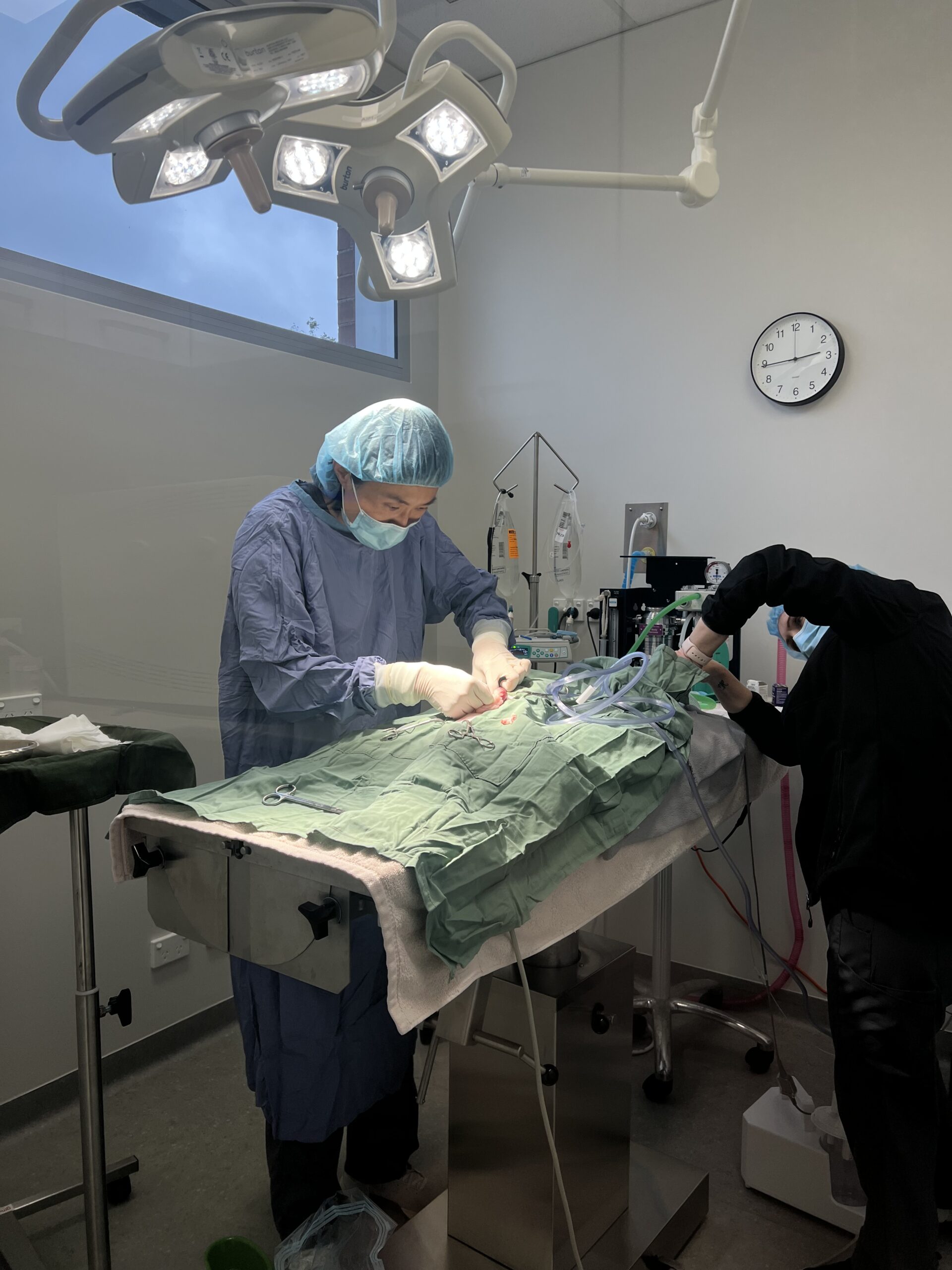
At The Village Vet, we provide professional desexing surgery for dogs and cats across Sydney’s North Shore, performed under general anaesthesia with comprehensive pain management and attentive post-operative care. We also provide rabbit desexing procedures as part of our small animal services.
We understand there is a lot of conflicting information surrounding desexing, particularly around the ideal age for dogs. That is why we take an individualised approach, providing recommendations tailored to your pet’s breed, size, sex, lifestyle, and overall health rather than using a one-size-fits-all approach.
Our focus is always on safety, comfort, and helping your pet recover as smoothly as possible.
Book Now


When should I desex my dog or cat?
The ideal age for desexing depends on your pet’s species, breed, size, sex, and overall health.
There is no longer a simple “one age suits all” approach, particularly for dogs. Modern veterinary recommendations now take into account factors such as growth, joint development, breed-related risks, behaviour, and lifestyle.
At The Village Vet, our veterinarians provide tailored recommendations based on your individual pet rather than applying the same timing to every animal.
Best age to desex a dog (Neutering)
The ideal age to desex a dog can vary significantly depending on breed and size.
For many smaller breed dogs, desexing is commonly performed around 6 months of age. However, some larger breed dogs may benefit from waiting until they are more physically mature before being desexed.
Factors we consider include:
- breed and expected adult size
- male versus female dogs
- behavioural considerations
- joint and growth development
- lifestyle and household environment
During your consultation, we will discuss the most appropriate timing for your individual dog and answer any questions you may have.
Best age to desex a cat (Spaying)
Most kittens are desexed between 4–6 months of age.
Early desexing helps:
- prevent unwanted litters
- reduce spraying and territorial behaviour
- prevent female cats going into heat
- reduce the risk of some reproductive diseases
Cats can become sexually mature surprisingly early, which is why desexing before maturity is generally recommended.
Why is desexing important?
Desexing provides a range of health, behavioural, and lifestyle benefits for many pets.
Potential benefits may include:
- prevention of unwanted pregnancies
- reduced risk of mammary tumours and reproductive disease
- prevention of testicular cancer
- reduced roaming behaviours
- reduced urine marking and spraying
- reduced hormone-driven mounting behaviours
- lower risk of some behavioural issues linked to hormones
Desexing can also reduce the financial and emotional challenges associated with unplanned litters.
Does desexing change a pet’s personality?
No, desexing does not change your pet’s core personality, intelligence, or affectionate nature.
However, it may help reduce some hormone-driven behaviours such as:
- roaming
- urine marking
- mounting
- some forms of territorial behaviour
Every pet is different, and training, socialisation, and environment still play a major role in behaviour development.
Will my pet gain weight after desexing?
Desexing can slightly reduce your pet’s energy requirements, but weight gain is not inevitable.
Maintaining a healthy weight after desexing usually comes down to:
- appropriate diet management
- portion control
- regular exercise
- ongoing weight monitoring
Our team can provide nutritional guidance to help keep your pet healthy and maintain an ideal body condition after surgery.
What happens during desexing surgery?
Pre-surgical assessment
Before surgery, your pet receives a thorough health examination to ensure they are fit for anaesthesia and surgery.
We will also discuss:
- the procedure itself
- fasting instructions
- recovery expectations
- any concerns or questions you may have
The procedure
Desexing is performed under general anaesthesia using modern monitoring equipment and surgical protocols.
Throughout the procedure, your pet is closely monitored by our experienced veterinary and nursing team to ensure safety and comfort.
Pain management and recovery
Pain relief is a major priority before, during, and after surgery.
Most pets go home the same day with:
- tailored pain relief medications
- detailed recovery instructions
- guidance on exercise restriction and wound care
The majority of pets recover very smoothly and comfortably following desexing surgery.
How long does recovery take after desexing?
Most pets recover well within 10–14 days.
During recovery, we generally recommend:
- restricting running and rough activity
- preventing licking of the surgical site
- monitoring appetite and energy levels
- following medication instructions carefully
Our team is always available if you have questions during your pet’s recovery.
Alternatives to surgical desexing
In some situations, non-surgical alternatives may be considered.
For example, Suprelorin implants can provide temporary hormonal suppression and sterility in male dogs. These implants may be useful in certain cases where owners wish to trial behavioural or hormonal changes before committing to permanent surgical desexing.
Our veterinarians can discuss whether alternative options may be appropriate for your pet.
Rabbit desexing
We also provide desexing procedures for rabbits.
Rabbit desexing is generally recommended around 4–6 months of age and can help reduce territorial behaviour, spraying, mounting, and aggression. In female rabbits, desexing also significantly reduces the risk of uterine cancer later in life.
Book NowThe Village Vet
At The Village Vet Clinics, we are dedicated to providing the highest quality vet services. Throughout all stages of your pet’s life, our compassionate and experienced team ensures your pet receives the best possible care. With cutting-edge equipment and a full range of facilities under one roof, you can trust us to offer expert recommendations and treatments tailored to your pet’s unique needs, no matter what your financial circumstances are. We strive to help your beloved pets live life to the fullest.
Book your appointmentWhy Choose us as your Vet?
Truly personal, Non-corporate care
Independent, family-owned, and community-driven. No corporate agendas. Just honest, personalised care tailored to each family’s individual needs and budget.
State of the art facilities
Advanced diagnostic imaging, surgical technology, in-house labs, and everything you’d expect from a much larger hospital. All delivered with genuine warmth and personal attention.
Fear Free-Inspired Care & Certified Calm Clinic
Every visit is designed to minimise stress and anxiety. Purpose built clinic designs, gentle handling, calming techniques, and a team trained in low-stress care makes all the difference.
Award winning
Three time Local Business Award winners and recognised as one of Australia’s Top 3 veterinary practices in 2025 & 2026. Our reputation is built on trust, consistency, and authentic client relationships.
What Pet Owners Say
Sue Cook
We own an elderly sausage dog who has weekly visits to see the vets and vet nurses for fluids for his kidney failure and laser treatment for his back .
All the vets and nurses in both practices are outstanding with their care. knowledge and understanding and I have great trust in everyone to provide the right course of treatment for our little boy to make his life more comfortable
Marisa
We love the whole team at West Pymble village vet, they have been looking after us for the past 5 years and always go above and beyond. Elle and the team took such beautiful care of our dog recently. I especially appreciated their communication and updates throughout his care. They’re the absolute best. Thank you!
David Han
I can’t recommend Martine and her veterinary team highly enough! From the moment you walk in, it’s clear that they are genuinely passionate about the health and well-being of your pet. Their knowledge and expertise is exceptional—they take the time to be thorough and ensure every concern is addressed with care and professionalism.
Their state-of-the-art facilities complement their exceptional veterinary skills to provide top-tier treatment. The entire team always goes above and beyond to make sure your furry friend receives the best possible care. I also love that they participate in sustainable initiatives to help protect the environment :)
If you want a veterinary team that treats your pet like family and delivers outstanding care every step of the way, Martine and her team are simply the best!
Sarah Bost
I cannot recommend The Village Vet enough for anyone looking for a caring, professional, and trustworthy place for their pets.
They have been looking after my puppies so beautifully, and every visit has been such a positive experience. The environment is very warm, calm, clean, and welcoming, and all the staff are incredibly friendly, kind, and professional.
From the moment you walk in, you feel comfortable and confident that your pets are in safe hands. They genuinely care about animals and take the time to communicate properly, answer questions, and provide support whenever needed.
I also really appreciate their helpful reminders, follow-ups, newsletters, and updates, which show how organised and caring they are with pet care and customer service.
Thank you to the whole team for always making Dela and Dora feel loved and well looked after. Highly recommended!
Mara Spessot
Love the feeling of joining an extended family who remembers your name, your pet’s name and cares. Such a friendly local practice and vibe.
James French
Have been using Pymble Veterinary Clinic for many years, all my dogs have been looked after by the team here, and even though I have moved further away, I still take my dog here. The staff are great, have the utmost respect for them.
Would not go anywhere else.
Paul Gilbertson
Our two Burmese kittens had a bad bout of diarrhoea and one wasn’t responding to the treatment. Dr Josie was in charge and worked really hard to find the underlying cause. She did find it and even after it was clear that the treatment was working she would ring every day to check up on our little Kira. It was very clear that she cared, as well as being a very good vet. It was also clear that the wider team was working with Josie to discover the problem. Once again 5 stars for the Village Vet team.
Bianca
The staff were super friendly and lovely! It was my first time there, and I absolutely loved the experience. They kept me updated via text messages about my dog, explained everything they did, and provided a detailed report. They also gave us a lovely welcome bag with some treats, which my dog absolutely loved!
I highly recommend this place. Thank you so much, Belle and Grace, for taking such good care of my dog! ❤️
Kel R
Great vets with wonderful support and service. My dog and cats don’t fear going – in fact they love it. Every staff member I’ve interacted with is helpful and happy. The locations is great, easy parking and access.
Anne
Wonderful team of vets, nurses and admin staff. They’ve looked after our two dogs and two cats with genuine, deep care, and sound and pragmatic advice, for many years. They always go above and beyond, providing support and wisdom.
Tn T.
A lovely, safe and comfortable environment for my two little doggies. We are always made to feel welcome and well looked after upon every visit. A pleasure to deal with.
Cat K
Amazing 😻 vet. They are thorough and practical. My cat who hates going to the vet was cuddling with the vet by the end of the session.
Lorem ipsum dolor sit amet, consectetur adipiscing elit, sed do eiusmod tempor incididunt ut labore et dolore magna aliqua. Ut enim ad minim veniam, quis nostrud exercitation ullamco laboris nisi ut aliquip ex ea commodo consequat.
Person Name
Lorem ipsum dolor sit amet, consectetur adipiscing elit, sed do eiusmod tempor incididunt ut labore et dolore magna aliqua. Ut enim ad minim veniam, quis nostrud exercitation ullamco laboris nisi ut aliquip ex ea commodo consequat.
Person Name
Frequently Asked Questions About Dog & Cat Desexing
The ideal timing depends on your dog’s breed, size, sex, and overall health. Smaller breeds are often desexed earlier, while some larger breeds may benefit from waiting until they are more physically mature. Our veterinarians provide tailored recommendations for each individual dog.
Most kittens are desexed around 4–6 months of age. Early desexing helps prevent unwanted litters, spraying behaviours, and female cats going into heat.
Desexing may help reduce hormone-driven behaviours such as roaming, urine marking, mounting, and some forms of aggression. However, it does not change your dog’s personality, and ongoing training and socialisation are still very important.
Desexing is performed under general anaesthesia with comprehensive pain management before, during, and after surgery. Most pets recover comfortably with appropriate rest and care at home.
Weight gain after desexing is usually preventable with appropriate diet management, portion control, and regular exercise. Our team can help guide nutrition and weight management following surgery.
Most pets recover very well within 10–14 days. We provide detailed recovery instructions, pain relief, and guidance on exercise restriction to help ensure a smooth recovery.
Spaying refers to desexing female pets and involves removal of the ovaries (and sometimes uterus). Neutering refers to desexing male pets and involves removal of the testicles.
Yes. In some cases, procedures such as microchipping or annual heartworm injections can be performed at the same time while your pet is already under anaesthesia.
Book Your Pet’s Dog & Cat Desexing Appointment
We offer desexing services from Monday to Friday. Drop off your pet in the morning and typically pick them up later that same day.
📅 Book online here or call us to secure an appointment:
📍 Pymble Clinic: 9499 4010
📍 Killara Hospital: 8350 5678