
What are the signs of arthritis in dogs?
Arthritis in dogs often shows as stiffness after rest, limping, reluctance to jump or climb stairs, and reduced activity. These changes are usually gradual and can easily be mistaken for normal ageing.
You know your dog better than anyone.
So when they start slowing down, even slightly, it’s something you notice.
Maybe they’re:
- taking longer to get up
- hesitating before jumping
- not as excited for walks
- a little stiff after resting
It’s easy to think:
“they’re just getting older”
But in practice, this is one of the most common ways arthritis and chronic pain present.
Is it normal for older dogs to slow down?
Some slowing down is expected with age.
But, pain is not normal
At The Village Vet, we regularly see dogs across Sydney’s North Shore who are slowing down due to underlying joint pain, not just ageing.
If your dog is:
- stiff
- less active
- reluctant to move
There is often something we can treat or improve.
What causes arthritis in dogs?
Arthritis develops when inflammation builds up in the joints and cartilage gradually wears down.
This leads to:
- pain
- stiffness
- reduced movement
It’s more common in:
- older dogs
- larger breeds
- dogs with previous injuries
But it can affect dogs at any age.
Why does arthritis cause stiffness after rest?
Arthritis causes inflammation inside the joints, which leads to stiffness, especially after rest.
This is why many dogs:
- struggle to get up
- look worse in the morning
- loosen up after moving around
The biggest misconception!
“It’s just old age”
This is one of the biggest misconceptions we see.
Ageing and pain often happen at the same time, but they are not the same thing.
With the right approach, many dogs:
- move better
- feel better
- stay active much longer
How do we manage arthritis?
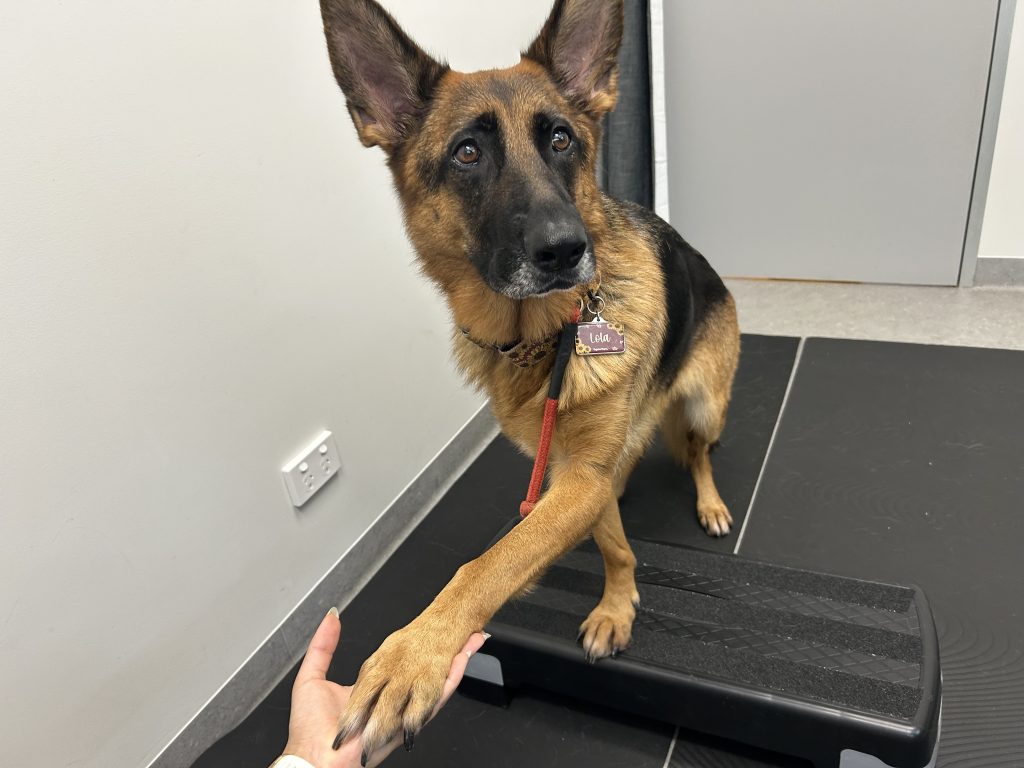
At The Village Vet, we don’t rely on a single treatment.
We build a tailored, whole-health plan based on your dog’s condition, lifestyle, and goals.
Laser therapy for pets
One of the most effective tools we use.
- reduces inflammation at a cellular level
- relieves pain
- improves circulation and healing
It’s pain-free, drug-free, and very well tolerated, even in older pets.
Dog physiotherapy
Equally important.
Physiotherapy helps:
- rebuild strength
- improve joint stability
- restore normal movement patterns
Without this, many dogs compensate, which can lead to further issues.
Pain management
Medication is used when needed, often alongside other therapies to reduce long-term reliance.
Joint supplements and disease-modifying support
In many cases, we also incorporate joint supplements and disease-modifying therapies to support long-term joint health.
These include:
• Pentosan polysulphate injections, which help improve joint fluid quality, support cartilage health, and reduce inflammation
• Nutraceuticals such as 4Cyte and Antinol, which provide anti-inflammatory support and help protect joint cartilage
These options don’t replace other treatments, but when used as part of a combined plan, they can:
• support joint function
• slow progression of arthritis
• improve comfort over time
They are particularly useful for long-term management, especially in older dogs or those with chronic joint disease.
Weight and lifestyle management
Small changes here can make a significant difference to joint health.
Why combining treatments changes everything?
- laser therapy reduces pain and inflammation
- physiotherapy restores movement and strength
- medication supports comfort when needed
- lifestyle and weight management reduce ongoing joint stress
Together, this approach:
- improves mobility
- reduces pain
- supports long-term joint health
- significantly improves quality of life
A real example: Meet Boris
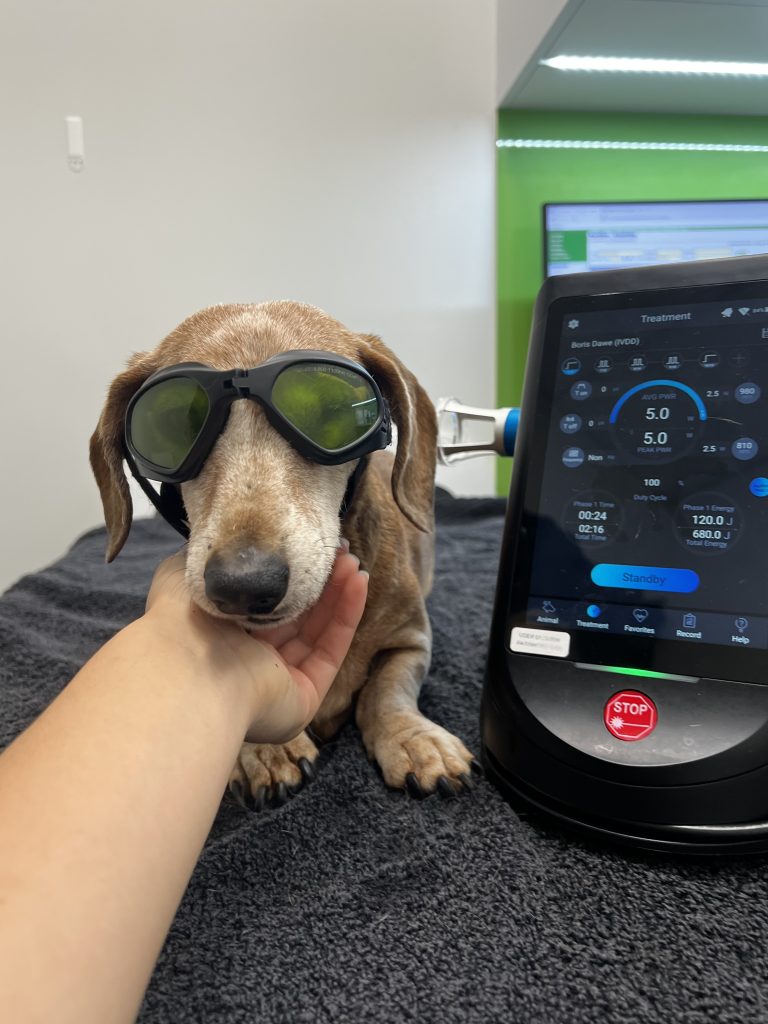
Boris is a 15-year-old miniature smooth-haired Dachshund who has been part of our clinic family for many years.
Like many older dogs, he has a few health challenges, including kidney disease, Cushing’s disease, osteoarthritis, and intervertebral disc disease (IVDD), which is common in this breed.
Boris had spinal surgery about eight years ago and did incredibly well, but as he’s gotten older, things have started to catch up with him. We also discovered he only has one kidney, which means his care now requires a very careful balance between managing pain and protecting his remaining kidney.
Because of this, we’ve taken a gentle, multimodal approach to his arthritis management. A big part of this has been regular laser therapy, which he comes in for twice a week to support his spine and neck.
Despite everything going on, Boris still enjoys pottering around the garden, sniffing, and spending time with his family.
That’s exactly what good arthritis management is about. Not just treating the condition, but maintaining comfort, mobility, and quality of life.
When should you book a check?
If your dog:
- is slowing down
- has stiff legs
- isn’t wanting to walk as much
It’s worth having them assessed early
We can often make a significant difference.